Under-Pillow Bluetooth Bone Conduction Speaker w/ Timer
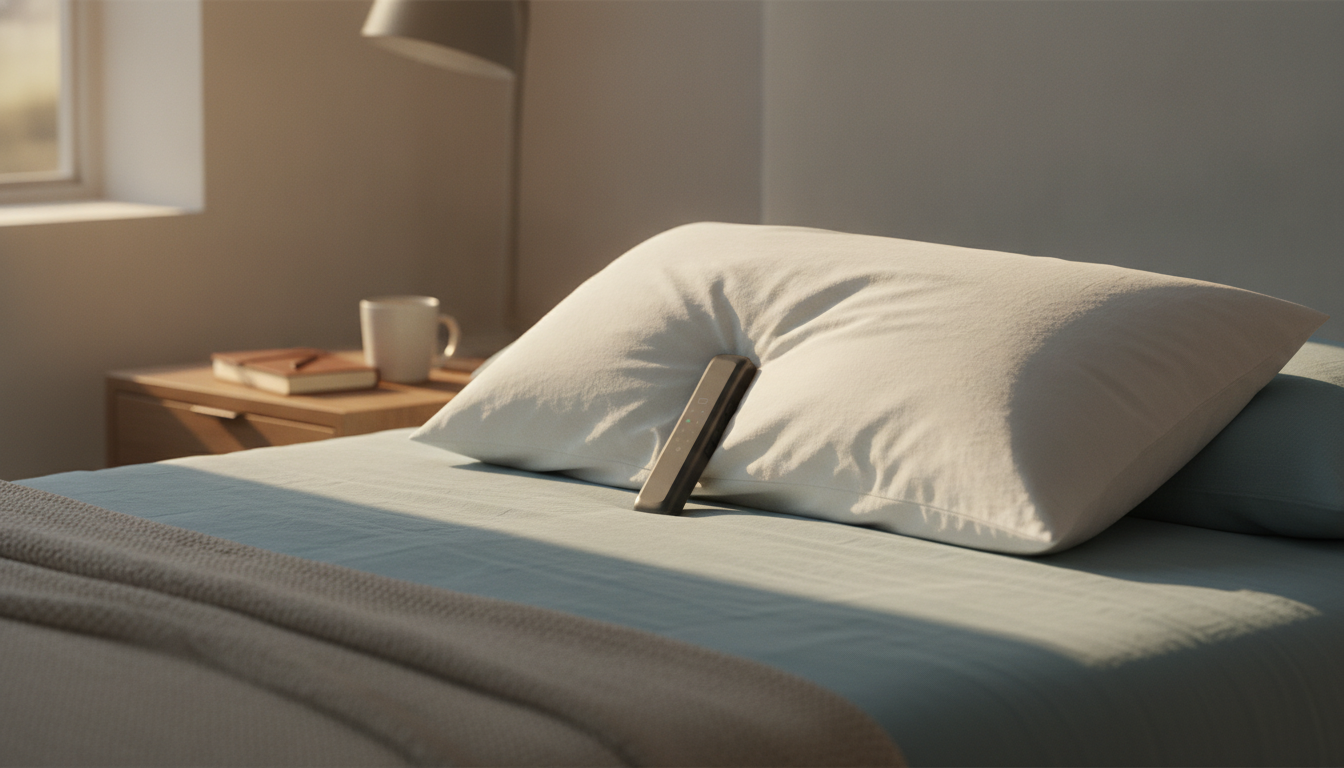
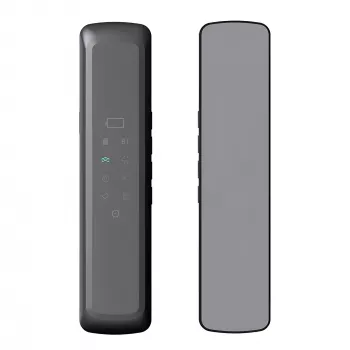
Bluetooth Bone Conduction Pillow Speaker – Wireless Sleep Sound Box with Timer
A pillow speaker should deliver clear, private audio without disturbing a partner, while staying comfortable through the night. This bone-conduction style sleep sound box is built for low-profile placement under a pillow and adds wireless Bluetooth playback plus a timer for hands-off listening. The result is a simple way to keep bedtime routines consistent—whether that means white noise, a sleep story, or a calming playlist—without wearing anything in your ears.
What It Is and Who It Fits Best
This is a low-profile pillow speaker designed to sit beneath your pillow so sound feels closer and more personal than a typical nightstand speaker. Instead of relying only on air-filled audio, it uses bone conduction–style vibration to transmit sound through the pillow material—helpful for anyone who finds earbuds uncomfortable at night.
It tends to fit especially well for:
- Side sleepers who don’t want an earbud pressed between ear and pillow
- Anyone using bedtime audio (white noise, nature sounds, meditation, audiobooks, sleep stories)
- Shared bedrooms where lower outward noise matters
- People who want a “set it once and drift off” routine with a timer
How Bone Conduction Under a Pillow Works
Inside the unit, a transducer creates subtle vibrations. Those vibrations travel through your pillow to the area around your ear and jaw, where your body picks up the sound. Because the sound travels through pillow material rather than only through open air, the audio can feel present at lower volumes—often the sweet spot for not bothering someone nearby.
Your experience will vary based on pillow thickness, firmness, and where the speaker sits relative to your ear. Medium thickness often balances comfort and clarity, while very thick, plush pillows can soften high frequencies and make speech less distinct.
Placement tips and what to expect
| Setup choice | Likely result | Quick adjustment |
|---|---|---|
| Speaker centered under head | Sound may feel diffuse | Shift toward the ear side by 2–4 inches |
| Speaker near ear position | Clearer perceived audio at lower volume | Angle slightly toward the jaw/temple area |
| Very thick pillow | Lower clarity, more muffled highs | Try a thinner pillowcase layer above the speaker |
| Firm pillow | Crisper vibration transfer | Reduce volume to avoid harshness |
Wireless Bluetooth Playback for Bedtime Listening
Bluetooth playback keeps things cable-free, which matters when you’re shifting positions at night. Pair the speaker with a phone or tablet and leave the device on the nightstand while audio streams to the pillow. It’s a practical setup for rotating between music, podcasts, ambient tracks, and sleep apps without rearranging your bedroom.
If a connection ever feels unstable, the easiest fixes are usually to move your phone a bit closer, reduce barriers (like a metal bedframe between you and the device), and temporarily disconnect other nearby Bluetooth accessories. For background on Bluetooth standards and compatibility, the Bluetooth SIG maintains the official Bluetooth Core Specification.
Timer and Sleep-Friendly Controls
A timer helps prevent audio from playing all night, which can reduce battery use and minimize late-night disruptions (like a podcast suddenly getting louder during an ad). The routine is straightforward: start your track, set the timer, and let it shut off automatically after the period you choose.
If a sleep app already includes a timer, it’s typically best to use either the app timer or the device timer—not both—so playback doesn’t cut off earlier than expected.
For broader sleep wellness guidance—like building consistent nighttime cues—see NIH MedlinePlus: Healthy Sleep.
Comfort, Noise Leakage, and Shared Rooms
Because the speaker stays under the pillow rather than on your ear, it can reduce pressure points and “hot ear” discomfort that in-ear devices sometimes cause. Bone conduction through the pillow can also lower outward noise compared to a small bedside speaker, but it won’t be perfectly silent—leakage depends on volume, pillow density, and how close the unit sits to the pillow edge.
To protect hearing over time, keep listening levels comfortable and avoid turning volume up to “fight” noise. The NIDCD offers practical safe-listening guidance in Hearing Protectors and Safe Listening.
Everyday Use: Setup, Charging, and Care
When a Pillow Speaker Beats Earbuds (and When It Doesn’t)
Product Options (In Stock)
- Bluetooth Bone Conduction Pillow Speaker – Wireless Sleep Sound Box with Timer ($41.65) – Compact under-pillow solution for more private bedtime audio with timer control.
- 20Kpa Cordless Stick Vacuum Cleaner for Hard Floor, Carpet & Pet Hair, Rose Red ($162.65) – Helpful for keeping bedroom floors and rugs clean so nighttime air feels fresher.
- Luxe Hacks for Small Closets Checklist | Digital Download Closet Organization Guide ($4.99) – A quick way to streamline bedroom storage and reduce clutter around the sleep space.
At-a-glance details
| Item | Price | Availability |
|---|---|---|
| Bluetooth Bone Conduction Pillow Speaker – Wireless Sleep Sound Box with Timer | $41.65 | In stock |
FAQ
Will a pillow speaker bother a partner sleeping next to me?
It can be less disruptive than a normal speaker because vibration travels through the pillow instead of broadcasting as much through the air, but some sound can still leak depending on volume, pillow type, and placement. Keeping volume low and positioning the unit closer to the center of your pillow on your side usually helps.
Where should the speaker be placed under the pillow for the best sound?
Start near the ear position on the side you sleep on, then adjust a few inches at a time until speech or ambient sound feels clear at a low volume. Thicker, softer pillows can sound more muffled, while firmer pillows tend to transfer vibration more crisply.
Does the timer turn off the audio automatically?
Yes—the timer is meant to stop playback after the set period so audio doesn’t run all night. If your sleep app also has a timer, use one timer method to avoid unexpected early shutoff.








Leave a comment