Tank-Fed Countertop Dishwasher: Programs for Small Spaces
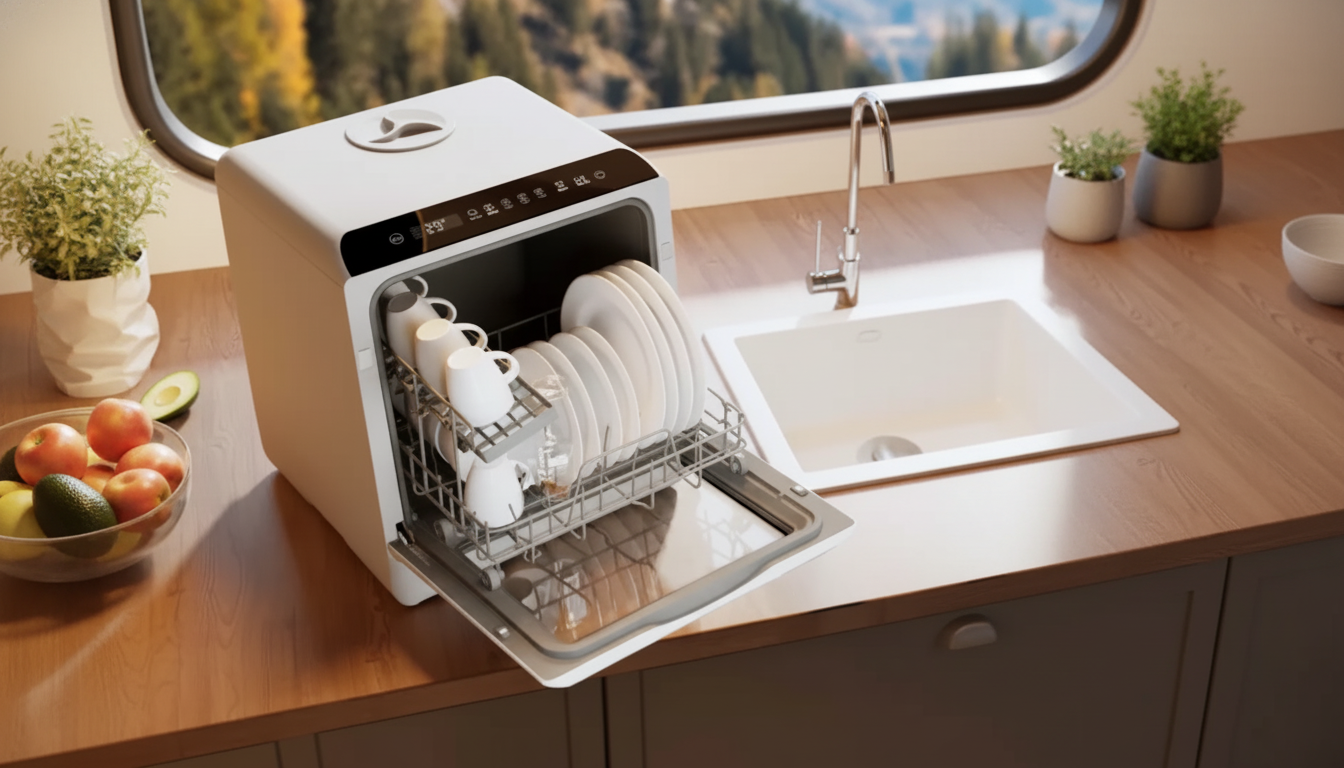
Compact Countertop Dishwasher with Built-in Water Tank and Multiple Washing Programs
A compact countertop dishwasher with a built-in water tank is designed for kitchens where permanent plumbing isn’t convenient—apartments, RVs, dorm-style living, or busy offices. With multiple washing programs, it can switch from quick touch-ups to heavier, grease-cutting cycles while staying small enough to sit on a counter or rolling cart. The result is a practical way to keep up with everyday dishes without committing to a full-size installation or sacrificing an entire cabinet run.
Who It Fits Best
This style of dishwasher is a strong match for routines where dishes pile up quickly but space and setup options are limited. It’s especially useful when handwashing becomes the default simply because a built-in dishwasher isn’t possible.
- Small households needing daily dish cleanup without a full-size machine
- Renters who can’t modify plumbing or cabinets
- RV, tiny home, or basement suites where a water hookup may be limited
- Office break rooms that need simple, repeatable washing cycles
- Anyone wanting to reduce handwashing time while keeping counter space in mind
What “Built-in Water Tank” Changes
The built-in tank is the feature that unlocks true flexibility. Instead of relying on a permanent inlet line, you fill the tank and run a cycle where the unit sits. That’s a major advantage for temporary setups, older buildings, and spaces where faucet adapters are annoying to attach and remove.
- Flexible placement: can be used where a dedicated inlet line isn’t available
- Simpler setup: fill the tank as needed rather than relying on permanent plumbing
- Good backup option: can still run in settings where water pressure or access is inconsistent
- Day-to-day habit: requires remembering to refill for each run (depending on usage and cycle)
Tank vs. Direct Hookup at a Glance
| Feature | Built-in Tank | Direct Faucet/Line Hookup |
|---|---|---|
| Best for | No-plumb spaces, temporary setups | Permanent kitchen placement |
| Setup effort | Minimal | May need adapter or installation |
| Placement flexibility | High | Limited by hose reach |
| Refill routine | Manual fill before cycles | Automatic water supply |
| Portability | Easier to move | Less convenient to relocate |
Multiple Washing Programs: Practical Uses
Multiple cycles matter more in a compact machine because you’re often washing smaller, more frequent loads. Being able to choose the right program helps avoid over-washing lightly used items while still having a “muscle” option for greasy plates or sticky cookware.
- Quick/Express: light soils, same-day coffee mugs, snack plates
- Standard/Normal: everyday mixed loads with moderate soils
- Heavy/Intensive: baked-on or greasy cookware and dinnerware
- Eco: reduced water/energy approach for lightly soiled loads (often longer cycle time)
- Rinse-only: helps prevent odors and drying-on when dishes will be washed later
For efficiency guidance, it can be helpful to compare general dishwasher energy and water practices through sources like ENERGY STAR’s dishwasher resources and the EPA’s WaterSense water-efficiency basics.
Capacity and Layout: Getting the Most from a Small Footprint
Two countertop dishwashers can have the same exterior size but feel very different in daily use depending on rack design and utensil storage. Before buying, focus on what you actually wash most—mugs, bowls, baby bottles, meal-prep containers—and make sure the layout supports those shapes.
- Measure usable interior space, not just exterior dimensions; racks and utensil holders determine real capacity
- Prefer adjustable or removable racks if mixing bowls, baby bottles, or taller cups are common
- Load strategy: place plates along the sides, bowls angled to drain, and avoid blocking spray arms
- Use dishwasher-safe items only; confirm plastics are heat-safe and placed away from high-heat zones
- Pre-scrape solids into the trash; avoid hard chunks that can overwhelm filters
Water, Power, and Placement Checklist
For general appliance safety reminders (placement, cords, and household use), review the U.S. Consumer Product Safety Commission appliance guidance.
Everyday Results: Tips for Cleaner, Drier Dishes
Care and Maintenance
Product Spotlight: Compact Countertop Dishwasher with Built-in Water Tank & Multiple Washing Programs
If you want a countertop-friendly option that’s designed to work even when plumbing access is limited, the Compact Countertop Dishwasher with Built-in Water Tank & Multiple Washing Programs is built for that exact use case. Multiple programs make it easier to match the cycle to the load—quick refreshes for lightly used dishware, and more intensive cleaning when meals are messier.
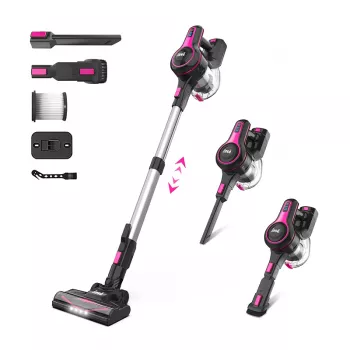
- 20Kpa Cordless Stick Vacuum Cleaner for Hard Floor, Carpet & Pet Hair, Rose Red
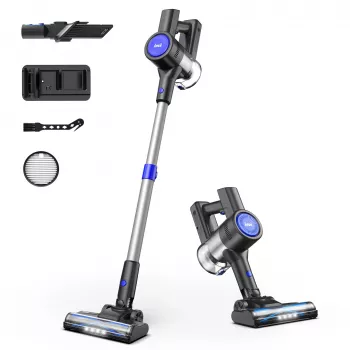
- Cordless Vacuum Cleaner, 235W Brushless Motor, 40Min Runtime, 6-in-1 Lightweight for Household Cleaning
Quick Specs to Confirm Before Purchase
| Detail | What to Check |
|---|---|
| Dimensions | Fits the counter with door clearance |
| Water supply method | Tank fill process and/or faucet connection options |
| Drain setup | Hose length and routing to sink/drain |
| Programs | Quick, normal, heavy, eco, rinse (as needed) |
| Maintenance | Accessible filter and spray arm cleaning |
FAQ
Does a countertop dishwasher with a built-in tank need to be connected to a faucet?
No—models with a built-in tank can run without a faucet connection because you manually fill the tank. You’ll still need to route the drain hose to a sink or suitable drain point, and some units may offer an optional faucet hookup for convenience.
What washing program should be used for greasy pans or baked-on food?
Use a heavy or intensive program for the best chance of breaking down grease and cooked-on residue. Pre-scrape solids first, use the correct detergent amount, and make sure dishes aren’t blocking the spray arms since longer, hotter cycles rely on strong water circulation.
Why are dishes still wet after the cycle?
Plastics often dry less completely because they don’t retain heat the way glass and ceramic do. Rinse aid can reduce spotting and improve sheeting, and cracking the door open briefly after the cycle helps moisture escape—especially if the load is tightly packed.








Leave a comment