Seasonal Farmers Market Shopping: What to Buy & Store
Why seasonal market shopping feels easier (and tastes better)
Farmers markets can feel like a shortcut to better meals because the best choices are often the simplest ones: buy what’s abundant right now, then cook around it. Peak-season produce is usually harvested closer to ripeness, which can translate to fuller flavor, better texture, and less “why is this tomato so sad?” disappointment once you get home.
Seasonal abundance also boosts variety. When tables are piled high with what’s coming in that week, it’s easier to try something new—an unfamiliar melon, a different apple cultivar, a bunch of tender greens—without overthinking it. Meal planning gets simpler, too: pick a few standout items, then repeat them across the week (salads, sheet-pan dinners, quick pastas, tacos, soups).
Finally, seasonal buying naturally supports low-waste habits. Extra herbs become a green sauce; broccoli stems become slaw; citrus peels become zest for baking. And when a crop is truly booming, it’s the perfect moment for batch cooking and preserving—freezing berries, roasting tomatoes into sauce, or stashing basil in olive-oil cubes.
Seasonal produce snapshot: what to look for throughout the year
Timing varies by region and growing method (field, hoop house, greenhouse), but a seasonal cheat sheet is still useful for planning. When multiple varieties show up, ask vendors what’s best today—growers usually know which harvest is at its peak, which needs a few days, and which is winding down. If a favorite item isn’t in season, look for preserved options that keep the spirit of the market alive: frozen berries, canned tomatoes, dried beans, or stored winter squash.
| Season | Common stars | What to watch for | Easy meal ideas |
|---|---|---|---|
| Spring | Asparagus, peas, radishes, spinach, strawberries (late spring) | Tender greens can wilt quickly—bring a cooler on warm days | Spring salads, asparagus sheet-pan dinners, pea pesto |
| Summer | Tomatoes, corn, cucumbers, zucchini, peaches, berries, melons | Buy stone fruit slightly firm; let it finish ripening on the counter | Caprese-style plates, salsa, grilled veg, fruit crisps |
| Fall | Apples, pears, winter squash, sweet potatoes, broccoli, cauliflower | Ask about squash curing and best storage spots at home | Roasted veg bowls, soups, baked apples, squash pasta sauce |
| Winter | Citrus (in many regions), hardy greens, root veg, stored onions/garlic | Look for freshness cues: firm roots, crisp greens, no soft spots | Sheet-pan roots, braised greens, citrus salads, stews |
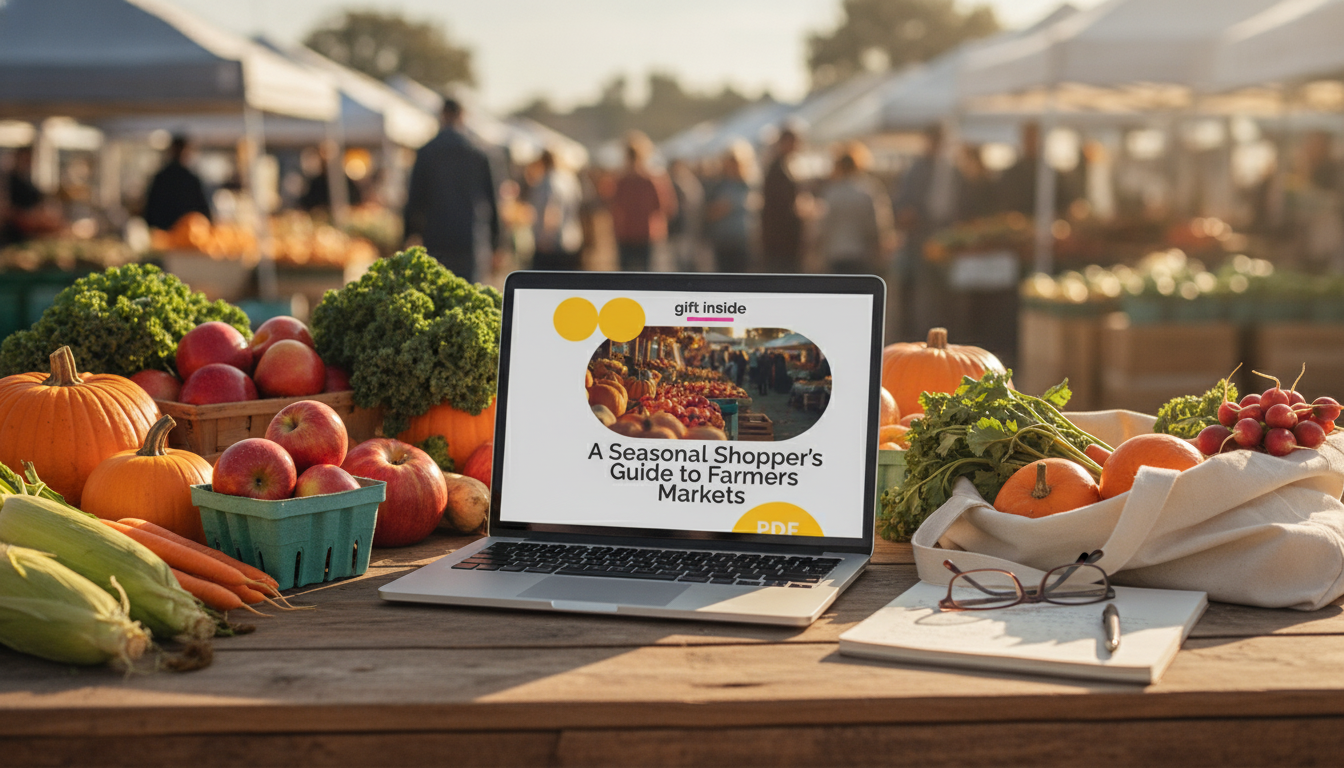
If you want a more detailed, ready-to-use reference for your phone or tablet, A Seasonal Shopper’s Guide to Farmers Markets (digital download) is a handy companion for quick decisions at the stall.
Before you go: a simple market plan that prevents overbuying
The easiest way to enjoy farmers market shopping is to avoid the “everything looked amazing” overflow. Anchor your week with just 2–3 meals, then leave a little space for spontaneous finds. For example: one sheet-pan dinner, one big salad night, and one soup or pasta that can flex around whatever looks best.
Pack a small kit that makes good intentions realistic: reusable bags, a tote or box for delicate fruit, a cooler with ice packs for anything perishable, and small bills if the market leans cash-heavy. Before leaving, jot a quick “use-first” list of what’s already at home (half a cabbage, aging onions, leftover herbs). That list becomes your secret weapon—buy what complements it, not what duplicates it.
A final rule of thumb: plan for variety without excess. Mix quick-eat items (berries, salad greens) with longer-keepers (carrots, beets, winter squash). That way, your haul lasts past the first enthusiastic day.
At the stall: how to choose produce and what to ask vendors
Food safety and handling basics for market finds
At home, rinse produce under running water before eating and skip soap or harsh cleaners. Dry greens and berries well after washing to slow spoilage; a paper towel in the container helps absorb moisture. If you’re unsure how something was handled—samples, pre-cut fruit—treat it as more perishable and refrigerate quickly. For more guidance, the FDA’s recommendations are a solid reference: Selecting and Serving Produce Safely.
Make it last: storage shortcuts that reduce waste
If you like a quick, organized home system for keeping ingredients visible (and preventing the “mystery greens” drawer), a simple declutter routine can help—Luxe Hacks for Small Closets Checklist (digital download) can be adapted to pantry and kitchen zones too: fewer piles, clearer categories, less forgotten food.
A handy digital companion for seasonal market shopping
If that sounds useful, A Seasonal Shopper’s Guide to Farmers Markets: Your Ultimate Digital Resource for Seasonal Produce & Farmers Market Shopping is an easy way to keep seasonal reminders and meal ideas on hand while you shop.
For broader seasonal timing inspiration, the USDA’s overview is also helpful: USDA Seasonal Produce Guide. And if you’re curious about market programs and how markets support local communities, the Farmers Market Coalition is a strong resource.
FAQ
What’s the best time to arrive at a farmers market?
Arrive early for the widest selection and specialty items (like the first strawberries or limited-run mushrooms). Go later for potential end-of-day deals, especially during peak season when there’s plenty to go around.
How can seasonal produce be identified when signs aren’t clear?
Ask vendors what was harvested this week, notice what’s appearing at multiple stalls, and watch for price drops on abundant crops. Regional seasonal charts can also help you sanity-check what “should” be in season where you live.
How should berries and leafy greens be stored to last longer?
Store berries dry in the fridge (don’t wash until eating), remove any damaged fruit, and use a ventilated container if possible. For leafy greens, dry well, store cold with a paper towel to manage moisture, and avoid packing them too tightly.











Leave a comment