Printable Self-Improvement Plan: Goals, Actions, Reviews
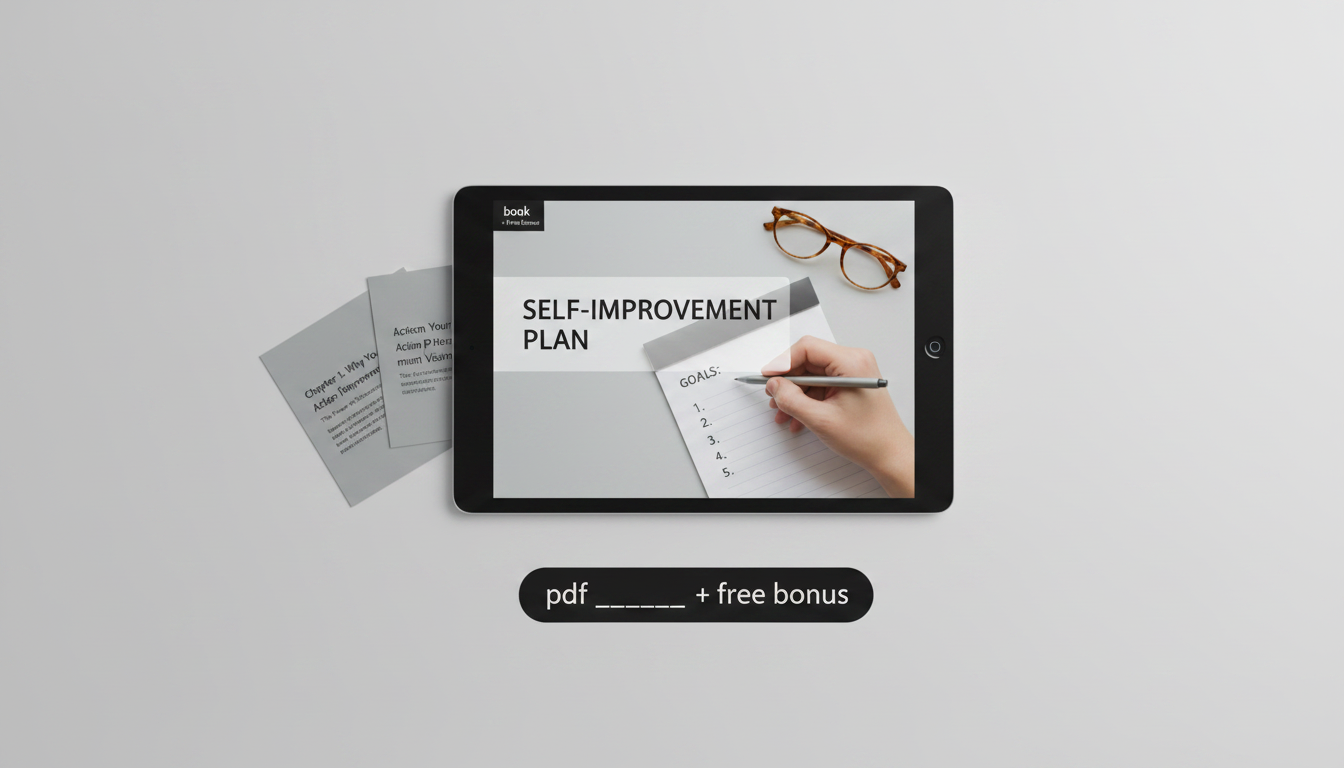
Motivation Is Great. A Printable Plan Is Better.
A solid self-improvement plan turns good intentions into a repeatable routine: decide what matters, set a realistic target, choose the next few actions, and track progress without turning it into a second job. When life gets busy, a simple printed system helps you restart quickly instead of “starting over.”
What a Self-Improvement Plan Is (and What It Isn’t)
A self-improvement plan is a simple system you can run every week: priorities → goals → weekly actions → tracking → review. It works best when it’s built around behaviors and environments, not just outcomes. For example, “walk 20 minutes after lunch” creates a clear cue and action, while “lose 10 pounds” doesn’t tell you what to do today.
It also isn’t a rigid schedule that collapses if a day goes sideways. The most useful plans are flexible frameworks with a quick reset. And they stay effective by limiting active goals to a small set—too many goals creates decision fatigue and constant restarts.
| Element | Purpose | Example |
|---|---|---|
| Priority | Defines what matters most right now | Health, career growth, relationships |
| Goal | Gives a clear target | Read 12 books this year |
| Action steps | Turns the goal into doable tasks | Read 10 pages nightly |
| Tracking | Makes progress visible | Habit tracker checkmarks |
| Review | Adjusts course and reduces guilt | Weekly 10-minute reset |
Build Your Plan in 7 Steps
Step 1: Pick one focus area per domain
Choose one focus area for each life domain you care about (health, work/learning, home, relationships, finances, mindset). You won’t pursue all of them at once—this is simply a menu that helps you pick the best “now” goal.
Step 2: Write a specific, measurable goal with a realistic deadline
Give your goal a number and a finish line. “Write 8 pages per week for the next 6 weeks” is easier to act on than “write more.” Research-backed guidance on goal clarity and performance shows that specificity helps keep effort consistent over time (Harvard Business Review).
Step 3: Add a one-sentence “why”
When energy dips, your “why” keeps the plan from feeling optional. Keep it short: “I’m building strength so I feel confident and energized during my workday.”
Step 4: Break it into milestones and weekly/daily actions
Step 5: Choose a tracking method
Pick one: habit tracker checkmarks, a simple checklist, a weekly score (0–7 days), or a few notes about what happened. Visibility matters—behavior-change guidance from the American Psychological Association highlights the value of practical strategies that make follow-through easier.
Step 6: Add friction-reducers
Reduce the number of decisions needed to start: prepare clothes, set reminders, pre-plan meals, block calendar time, or place tools where you’ll see them. For health routines, the CDC also emphasizes practical habit-building approaches that support consistency.
Step 7: Schedule a weekly review (adjust actions, not your worth)
| Prompt | What to write | Outcome |
|---|---|---|
| What worked? | 1–3 actions that helped | Repeat the wins |
| What got in the way? | Barriers or patterns | Plan around obstacles |
| What changes next week? | One small adjustment | Keep the plan realistic |
Printable Pages That Keep You Consistent
| Setup | Best for | How to use |
|---|---|---|
| Binder system | People who like paper + routine | Print core planning pages once; reprint weekly trackers and reviews |
| Weekly packet | Minimal printing | Print only the next 7 days of action steps + tracker |
| Tablet/PDF workflow | On-the-go planning | Fill digitally; print only when a physical checklist helps |
What’s Inside “Your Self-Improvement Plan” Digital Guide
If you want a ready-to-print structure, Your Self-Improvement Plan printable goal-setting eBook walks you through setting a goal, turning it into an action plan that fits real life, and running simple weekly adjustments. The pages are designed to reduce overwhelm with clear prompts, straightforward tracking, and room to iterate instead of quit.
| Use case | Typical goal | Best pages to start with |
|---|---|---|
| Habit building | Drink more water | Habit tracker + weekly review |
| Skill growth | Learn a new tool | Action steps + milestone planner |
| Mindset routine | Daily journaling | Daily checklist + reflection prompts |
Example Action Plan (Simple and Realistic)
| If the action feels too hard… | Resize it to… | Example |
|---|---|---|
| Too time-consuming | A 5–10 minute version | Walk 10 minutes instead of 30 |
| Too complex | One clear trigger + one behavior | After coffee, write 3 priorities |
| Too frequent | 2–3 days per week | Strength training Mon/Wed/Fri |
Common Sticking Points (and How to Fix Them)
Pair Your Plan With a Simpler Home System (Optional)
A less cluttered environment reduces friction and distractions, which makes routines easier to keep. For a quick win, a focused checklist can simplify one small area (like a closet) and reinforce follow-through habits. Luxe Hacks for Small Closets checklist is an easy “one area, one plan” reset that pairs well with habit tracking.
If your improvement plan includes cleaning routines or a calmer workspace, upgrading tools can help reduce resistance. A lightweight option like the 20Kpa Cordless Stick Vacuum Cleaner for Hard Floor, Carpet & Pet Hair can make quick resets faster—especially when the goal is consistency, not perfection.
FAQ
How long does it take to create a self-improvement action plan?
A first draft usually takes about 20–45 minutes. After that, a 10-minute weekly review is enough to keep it updated and realistic as your schedule changes.
Should the plan focus on one goal or multiple goals?
Stick to 1–2 active goals at a time, supported by a few small habits. Too many goals makes tracking harder and increases the odds of dropping everything when life gets busy.
Do printable trackers actually help with consistency?
Yes—trackers create visibility and a simple feedback loop, so progress is measurable instead of guesswork. Checklists also reduce decision fatigue, especially when paired with a short weekly review to adjust what isn’t working.










Leave a comment