How to Tell if Your Cat Is Happy (Signs & Simple Fixes)
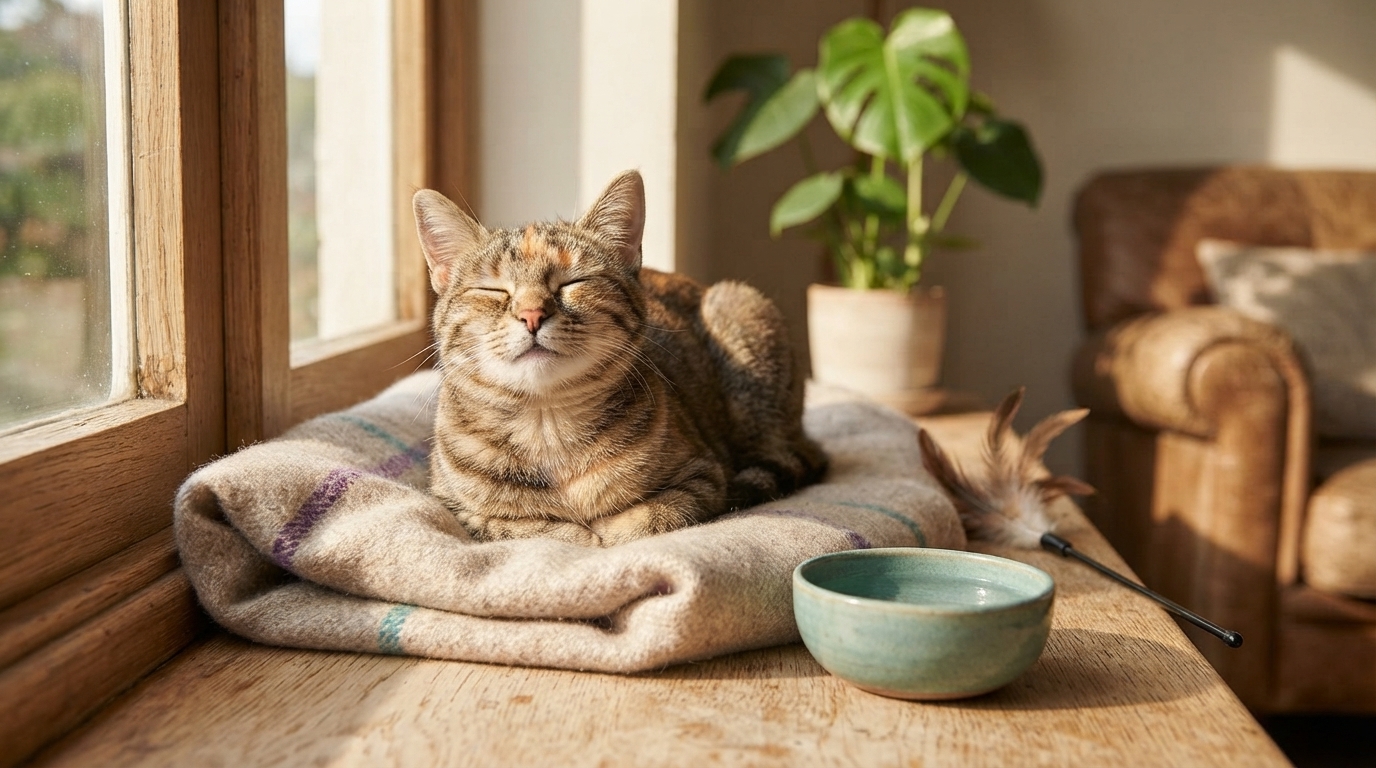
What “Happy” Looks Like for a Cat
A happy cat isn’t “happy” the way a dog might be—there’s usually no constant tail-wagging or big outward displays. Feline well-being is quieter and more about steady comfort than nonstop affection. When things are going well, most cats show:
- Comfort and safety: relaxed muscles, predictable routines, and a home that doesn’t keep them on constant alert.
- Healthy curiosity: exploring, playing, and checking out household activity without seeming jumpy or defensive.
- Choice and control: the ability to move away, hide, perch up high, and approach people on their own terms.
- Species-typical behavior: scratching, climbing, hunting-style play, grooming, and resting in favored spots.
If you’d like deeper behavior guidance and a simple way to spot patterns over time, Understanding Whether Your Cat Is Happy – A Complete Guide on How to Tell If Cat Is Happy, Decode Behavior, and Create a Joyful Life can help you turn daily observations into a clearer routine that supports long-term calm.
Body Language Signals That Usually Mean Contentment
Body language is often the most reliable “mood meter,” especially when you read it as a full picture (eyes + ears + tail + overall posture) rather than a single cue.
- Soft, neutral posture: loose limbs, relaxed shoulders, and a calm facial expression.
- Slow blinks and half-closed eyes: typically a sign of comfort and trust in the moment.
- Tail carried neutrally or gently upright when greeting (not stiff, lashing, or puffed).
- Ears mostly forward or gently swiveling to sounds rather than pinned back.
- Kneading, stretching, and lounging on the side or back (belly exposure varies by individual).
- Friendly head bumps or cheek rubs: scent-marking that can signal social comfort.
Quick decoding guide: relaxed vs. stressed signals
| What you notice | Often means contentment | Often means stress or discomfort | What to do next |
|---|---|---|---|
| Eyes | Slow blinks, soft gaze | Hard stare, wide pupils with tense face | Reduce stimulation; offer space; observe triggers |
| Tail | Loose, gently upright greeting | Fast whipping, tucked low, puffed | Pause interaction; check environment and noise |
| Ears | Forward/neutral, smooth swiveling | Flattened, sideways “airplane” with tension | Stop handling; let cat retreat |
| Body | Loose muscles, resting on side | Crouched low, rigid, hiding excessively | Provide safe hiding spots; review stressors |
| Vocalizing | Quiet chirps/trills in context | Persistent yowling, growling, hissing | Rule out pain; consult vet if sudden |
Everyday Behaviors That Suggest Your Cat Feels Good
Daily habits are where happiness shows up most clearly. A content cat usually looks “normal” from day to day—steady, predictable, and comfortable using the home.
- Regular appetite and stable drinking (not sudden increases or decreases).
- Consistent grooming without overgrooming or bald patches.
- Healthy sleep patterns: lots of rest plus brief windows of alertness and play.
- Comfortable social behavior: chooses to be near people or other pets without being clingy or fearful.
- Play that looks like “hunt practice”: stalking, pouncing, chasing, and short bursts of energy.
- Reliable litter box use without sudden changes in location or posture while eliminating.
When “Normal” Isn’t Happy: Subtle Signs of Stress
Stress in cats can be quiet and easy to misread as “they’re just being lazy” or “they’re independent.” What matters most is change: new patterns, reduced flexibility, or behavior that looks smaller and more restricted than usual.
- Hiding more than usual or staying in one room all day.
- Irritability: swatting, biting, or sudden avoidance during previously tolerated handling.
- Overgrooming, dandruff, or a dull coat (can be stress, pain, or medical).
- Litter box issues: going outside the box, straining, or frequent small attempts.
- Changes in play: no interest at all, or frantic play paired with agitation.
- Nighttime restlessness, increased vocalizing, or pacing—especially if new.
If these shifts are sudden, treat them as a health flag first. Pain, dental issues, urinary problems, and arthritis can look like “mood.” Authoritative behavior guidance is available from the American Association of Feline Practitioners (AAFP) and practical well-being resources from International Cat Care.
Common Behavior “Translations” (And the Context That Matters)
Create a Joyful Home: Practical Upgrades That Improve Cat Mood
- 20Kpa Cordless Stick Vacuum Cleaner for Hard Floor, Carpet & Pet Hair, Rose Red
- Cordless Vacuum Cleaner, 235W Brushless Motor, 40Min Runtime, 6-in-1 Lightweight for Household Cleaning
For more behavior-forward enrichment ideas—especially if you’re trying to tell boredom from anxiety—keep a reference guide handy: Understanding Whether Your Cat Is Happy – A Complete Guide on How to Tell If Cat Is Happy, Decode Behavior, and Create a Joyful Life.
A Simple 7‑Day Happiness Check-In
A Deeper Guide for Reading Signals and Building Better Routines
For additional behavior help from an animal welfare organization, the ASPCA’s cat behavior resources offer practical explanations of common concerns.
FAQ
How can a cat look relaxed but still be unhappy?
Some cats “shut down” under stress and appear quiet or still rather than visibly anxious. Watch for reduced play, more hiding, changes in grooming, appetite shifts, or litter box changes over time, and rule out pain if the behavior change is sudden.
Do cats always purr when they’re happy?
No—purring often means comfort, but it can also show up with anxiety or discomfort. If purring is paired with lethargy, appetite changes, or unusual hiding, a vet check is a smart next step.
What’s the fastest way to make an indoor cat happier?
Start with a short daily interactive play routine, add vertical space (perches or cat-safe shelving), and offer multiple scratchers in key areas. Consistency matters most, and letting your cat choose when to engage reduces pressure and builds confidence.










Leave a comment