Best Pets for Busy People: Time-Smart Matching Guide
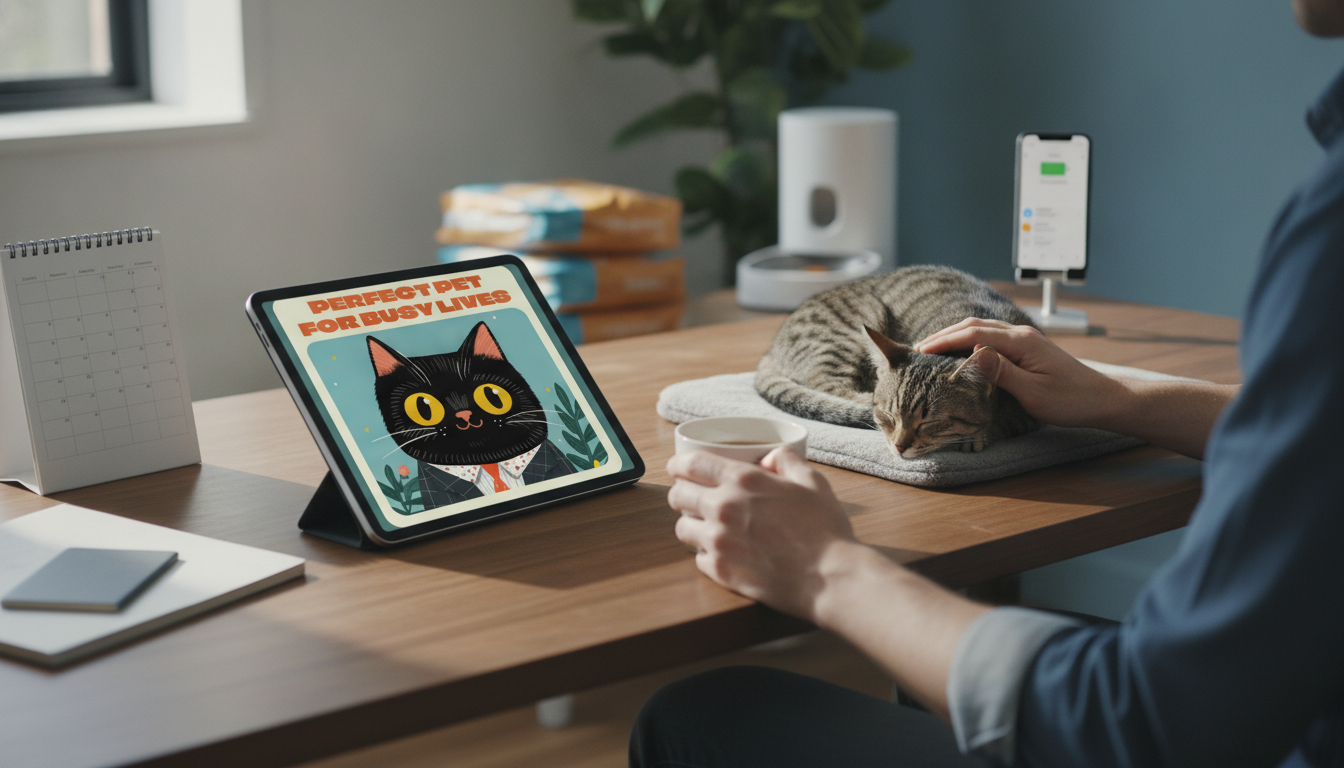
Smart Companions for Busy Lives: A Practical Pet-Matching Guide
A busy schedule doesn’t rule out having a pet—it changes what “the right pet” looks like. The goal is a match where the animal’s daily needs fit your real calendar, your home setup, and your support system (automation, routines, and backup care). When those pieces line up, pets can thrive without constant hands-on attention—and you can enjoy companionship without daily stress.
Start with the non-negotiables
1) Your true daily time budget
Estimate realistic minutes available on workdays versus weekends for feeding, cleaning, play/exercise, and grooming. A pet that “only needs an hour” can become a problem if that hour depends on perfect days that rarely happen.
2) Schedule unpredictability and backup care
Travel, late nights, on-call shifts, and frequent social plans aren’t deal-breakers, but they require a plan: a neighbor, family member, or professional sitter/walker who can step in reliably. Write down care instructions before you need them.
3) Home constraints
Factor in apartment rules, yard access, temperature control, and whether you can create safe pet zones (and separate areas when needed). Some pets do best with stable territory, predictable resting spaces, and controlled access to cords, plants, and clutter.
4) Sensitivities
Allergies, noise tolerance, odor tolerance, and comfort with shedding matter as much as time. A pet that fits your schedule but triggers daily discomfort often leads to inconsistent care and frustration.
5) Budget basics
Beyond food and supplies, plan for routine veterinary care, pet insurance or an emergency fund, and boarding/pet sitting during travel. For practical health and safety guidance, consult resources from the American Veterinary Medical Association (AVMA) and the ASPCA.
Lifestyle matching: what different pets require
The biggest mismatch for busy households is confusing “low daily interaction” with “low care.” Many pets don’t need constant attention, but they do need consistent basics: clean environment, proper diet, and stable conditions.
Dogs
Social needs and exercise are the main time drivers. Breed traits and age often matter more than size alone. An adult dog with a known temperament can be a steadier fit than a high-energy puppy that needs frequent training and supervision.
Cats
Cats are typically more flexible day-to-day, but still need daily interaction, litter upkeep, and enrichment. Under-stimulated cats may show stress behaviors like nighttime zoomies, scratching, or litter box avoidance.
Small mammals (hamsters, guinea pigs, rabbits)
Training demands may be lighter, but habitat cleaning and species-specific handling/enrichment are essential. Some are sensitive to heat, diet changes, or subtle health issues—so they’re not “set and forget.”
Fish and reptiles
Often lower daily interaction, but they require consistent habitat conditions and equipment reliability. The work is less about playtime and more about routine monitoring, maintenance, and preventing small issues from becoming emergencies.
Adoptable adults vs. babies
Adult pets often come with established temperaments and energy levels, making it easier to match to a busy household. Babies are adorable—but they’re also the highest-variance option for time, training, and behavior.
Quick comparison for busy schedules
| Pet type | Typical daily hands-on time | Best for | Common friction points | Support tools that help |
|---|---|---|---|---|
| Adult cat | 20–45 min | Apartments, variable schedules | Litter tracking, boredom if under-stimulated | Auto feeder, water fountain, extra litter boxes, puzzle toys |
| Senior or calm adult dog | 60–120 min | People who can commit to walks and companionship | Separation distress, exercise needs, training upkeep | Dog walker, enrichment feeders, consistent routine, crate/pen training |
| Small mammal (guinea pig/rabbit) | 30–60 min | Hands-on caretakers who can maintain habitat | Frequent cleaning, sensitive health needs | Habitat liners, scheduled cleanups, hay racks, grooming tools |
| Freshwater fish (community tank) | 10–20 min | Low-noise households, limited interaction needs | Water quality, cycling, equipment failures | Auto timer lights, reliable filter, test kit, backup power plan |
| Reptile (species-dependent) | 10–30 min | People who like structured routines | Heating/UVB requirements, feeding schedules | Thermostat, timers, temperature/humidity monitors |
A simple decision path for busy days
AI-assisted matching and a care plan that holds up
Stress-test the plan by mapping what happens during sick days, overtime, and weekend trips—then assign a backup person or service. Watch for welfare checkpoints such as appetite changes, litter/urination shifts, hiding, destructive behavior, or excessive vocalization. For household health considerations around pets, the CDC Healthy Pets, Healthy People resources are a helpful reference.
Smart setup for low-effort consistency
Feeding and hydration
Enrichment that fits real life
Environment and cleaning systems
Digital guide to speed up the decision and reduce mistakes
If you want a structured, time-saving way to compare options, Smart Companions: Choosing the Perfect Pet for Busy Lives (digital guide) is designed to turn schedule and home constraints into a practical match—then translate that match into a routine you can keep on hectic weeks.
Keeping a pet-friendly home manageable
- 20Kpa Cordless Stick Vacuum Cleaner for Hard Floor, Carpet & Pet Hair, Rose Red
- Cordless Vacuum Cleaner, 235W Brushless Motor, 40Min Runtime, 6-in-1 Lightweight for Household Cleaning
FAQ
What is the easiest pet to care for with a busy schedule?
“Easiest” depends on your time, travel frequency, and home setup: adult cats often fit variable schedules, while fish or some reptiles can be lower-interaction but demand stable habitat conditions. Automation helps, but it doesn’t replace consistent welfare checks and proper maintenance.
Can a busy person responsibly have a dog?
Yes, if daily exercise and interaction time is reliable and there’s a backup plan such as a walker or sitter. Adult dogs with known temperaments are often a better fit than puppies, and separation distress should be considered before committing.
How can pet care be simplified without cutting corners?
Use routines (set feeding and cleanup windows), prep (portioning and restocking days), and automation (feeders, timers) paired with enrichment rotation. Simplifying works best when monitoring and veterinary care stay consistent and non-negotiable.











Leave a comment