AI Self-Care Tracker: Daily Checklist for Stress & Growth
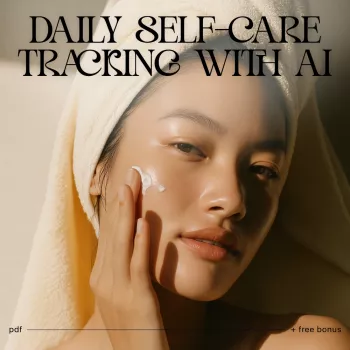
Daily Self-Care Tracking with AI: A Simple Checklist for Stress Relief, Mindfulness, and Personal Growth
A consistent self-care routine becomes easier when daily choices are small, specific, and trackable. With AI, tracking can feel less like paperwork and more like gentle guidance—helping spot patterns, reduce stress, and build habits that support mental clarity and growth.
What “self-care tracking” looks like when AI is involved
Self-care tracking works best when it turns fuzzy intentions into simple signals you can notice and repeat. AI helps by organizing those signals and reflecting them back without you having to overthink every day.
- Turns vague goals (“feel better”) into observable signals (sleep hours, mood rating, movement minutes, hydration, stress triggers).
- Uses short daily check-ins to summarize progress and suggest the next best action (one small step, not a complete overhaul).
- Finds patterns across days and weeks (what improves mood, what increases stress, what helps recovery).
- Reduces decision fatigue by reusing prompts, reminders, and templates.
Set up a lightweight system that can last
The best tracking system is the one you can keep doing when life gets busy. Aim for quick, repeatable check-ins rather than perfect logs.
- Choose one place to log: notes app, spreadsheet, journaling app, or a digital checklist template.
- Pick 5–8 daily signals to track (too many creates friction; too few hides patterns).
- Decide a check-in rhythm: a 60–90 second morning intention + a 2–3 minute evening recap.
- Create simple rating scales (e.g., mood 1–10, stress 1–10, energy 1–10) to make trends visible.
- Add one weekly review slot (10 minutes) for AI to summarize what worked and what didn’t.
If you want a ready-to-use template, the Daily Self-Care Tracking with AI checklist keeps everything in one place with copy-friendly fields and a clean structure that’s easy to maintain.
AI-assisted daily checklist (copy-friendly prompts)
Consistency matters more than cleverness. Use the same few fields each day so trends become obvious. Start with facts, then add one short reflection—enough to learn, not enough to spiral.
- Keep prompts short and consistent so the AI can compare days accurately.
- Log facts first (sleep, movement, food, screen time), then reflections (mood, stress, gratitude).
- Ask for one suggestion at a time: the best next step for today based on the last 7 days.
- Include a “minimum viable day” option for busy or low-energy days so the habit never breaks.
Daily Self-Care Checklist (AI-Friendly)
| Area | What to log (30–60 seconds) | AI prompt to use | Example entries |
|---|---|---|---|
| Sleep | Hours slept + quality (1–10) | Summarize how sleep relates to my mood and energy this week. | 6.5h, quality 5/10 |
| Stress | Stress level (1–10) + main trigger | Identify top stress triggers and one coping action for tomorrow. | 7/10, tight deadlines |
| Mindfulness | Minutes practiced + type | Suggest a 3-minute mindfulness practice that fits my recent stress patterns. | 5 min breathing |
| Movement | Steps or minutes + intensity | Show whether movement correlates with lower stress for me. | 20 min walk |
| Nutrition/Hydration | Water + one nutrition note | Recommend one easy nutrition tweak for steadier energy. | 60 oz, skipped lunch |
| Connection | One interaction that helped or drained | Help me set one boundary or reach out to one person tomorrow. | Call with friend helped |
| Personal growth | One small win + one lesson | Turn today’s lesson into a tiny goal for tomorrow. | Finished task; learned to time-block |
| Recovery | One restorative activity | Based on my week, propose one low-effort recovery activity for tonight. | Shower + early bed |
Stress relief tracking: what to measure (and what to avoid)
Stress is easier to reduce when it’s defined. Instead of “I was stressed,” capture a quick snapshot: the number, the trigger, and how it felt in your body. Over time, prevention becomes more obvious than willpower.
For more on how stress affects the body and why recovery matters, see the American Psychological Association’s overview of stress effects.
Mindfulness tracking without turning it into a chore
The National Center for Complementary and Integrative Health offers a clear, evidence-informed explanation of meditation and mindfulness basics.
Personal growth tracking: turn reflections into tiny experiments
Privacy and boundaries when using AI for self-care
Make it stick: a 7-day starter plan
Pairing a self-care checklist with a simple home reset can also lower background stress. If physical clutter adds to mental clutter, the Luxe Hacks for Small Closets Checklist offers quick, structured steps that are easy to complete in short bursts.
Recommended tools (in stock)
- Daily Self-Care Tracking with AI: How to Track Daily Self Care with AI Checklist for Stress Relief, Mindfulness, and Personal Growth ($5.99)
- Luxe Hacks for Small Closets Checklist | Digital Download Closet Organization Guide, Minimalist Wardrobe Decluttering Tips, Small Space Storage Solutions ($4.99)
FAQ
What should be tracked daily for self-care without feeling overwhelmed?
Track 5–8 signals max: sleep, stress, mood, movement, mindfulness minutes, hydration or one nutrition note, connection, and one win/lesson. Keep a “minimum viable day” option (just sleep + stress + one recovery action) so the habit doesn’t break.
Can AI actually help with stress relief and mindfulness habits?
Yes—AI can support consistency by prompting quick check-ins, suggesting one small next step, and summarizing trends you might miss day to day. It’s a support tool, not a replacement for therapy or medical care.
How can self-care tracking be kept private when using AI tools?
Limit sensitive details and write in anonymous, pattern-focused terms (ratings, triggers, routines) rather than identifiers. Store notes locally when possible, review privacy settings, and avoid sharing information that could compromise safety.










Leave a comment