18W Quick Charge 3.0 USB Wall Charger: Fast, Compact
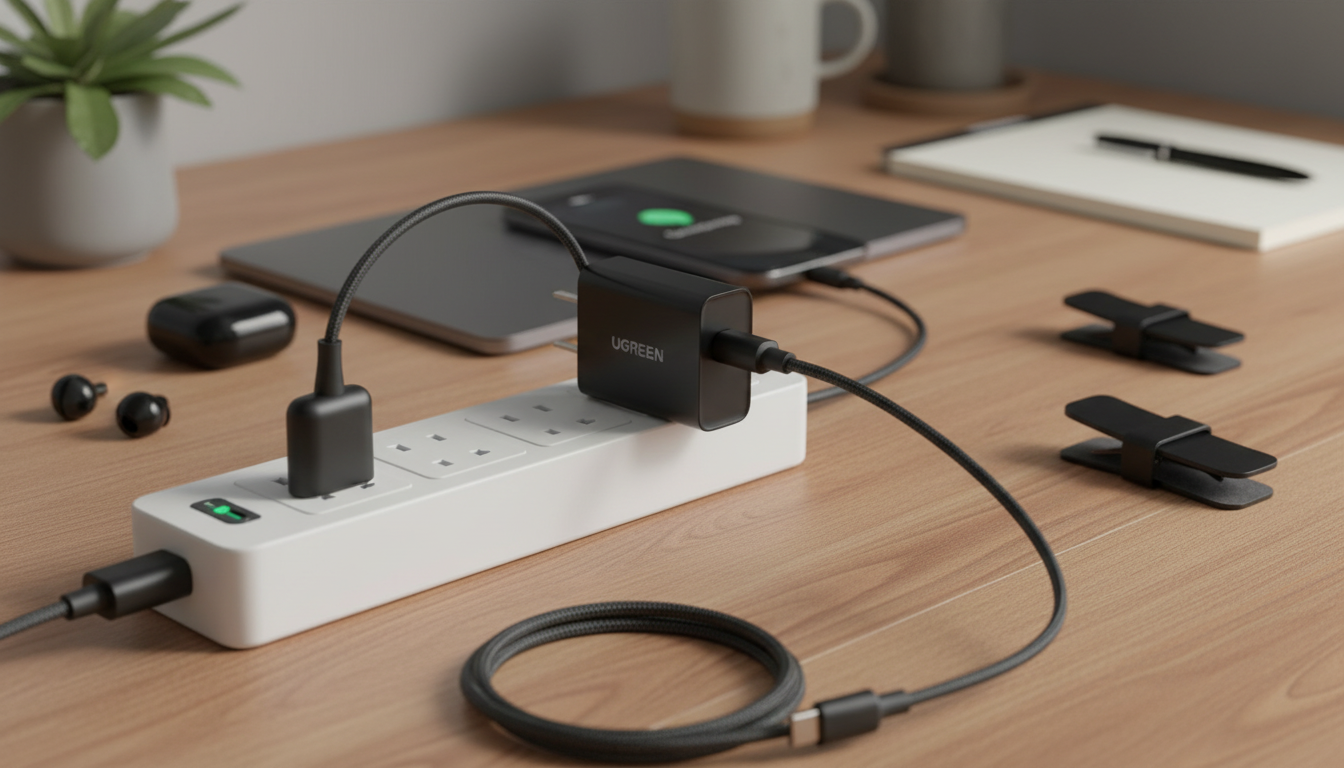
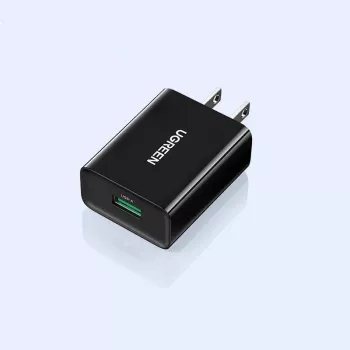
18W Fast USB Wall Charger with Quick Charge 3.0: Small Adapter, Big Difference
A compact wall charger can make the difference between a phone that lasts through the day and one that’s always tethered to an outlet. The 18W Fast USB Wall Charger with Quick Charge 3.0 for Phones is designed for faster top-ups, everyday reliability, and simple plug-and-go use at home, at work, or while traveling. With a familiar USB-A port and Quick Charge 3.0 support, it’s an easy upgrade from older low-watt adapters that struggle to keep up with modern battery sizes.
What This 18W Quick Charge Wall Charger Is Made For
- Faster charging for compatible Android phones and other QC-enabled devices using Quick Charge 3.0.
- Everyday charging for common USB-powered devices such as wireless earbuds, power banks, and Bluetooth speakers (at standard charging rates when QC isn’t supported).
- A practical spare charger for a desk, nightstand, travel bag, or shared household outlet.
- A budget-friendly upgrade from older 5W chargers that feel slow during quick top-ups.
Key Features That Matter Day to Day
- 18W maximum output: Provides noticeably quicker charging than basic 5W adapters when paired with a compatible cable and device.
- Quick Charge 3.0 support: Negotiates power with supported devices to improve charging speed and efficiency. (For a deeper technical overview, see Qualcomm’s Quick Charge technology overview.)
- USB-A output: Widely compatible with many existing cables and accessories, which is helpful when you already own multiple USB-A cables.
- Compact wall-plug design: Reduces clutter and keeps outlets usable in tight spaces—behind furniture, in power strips, or at airport seats.
- Built for routine use: Ideal for short charge windows during morning routines, commutes, meetings, and travel layovers.
Compatibility: Phones and Devices That Can Benefit
- Quick Charge devices: Many Android phones (and some accessories) that explicitly support QC 3.0 can charge faster.
- Non-Quick Charge devices: Will still charge safely, typically at standard USB charging rates determined by the device.
- Cables matter: You’ll need a quality USB-A to USB-C, USB-A to Micro-USB, or USB-A to Lightning cable (for Apple devices). Charging speed depends on the device and cable capability.
- QC vs. USB-C Power Delivery: If a phone supports USB Power Delivery (USB-C PD) but not QC, a QC wall charger may not deliver the fastest possible rate compared with a PD charger.
- For iPhones: Charging works, but iPhones typically fast-charge best with USB-C PD. A USB-A QC charger is a dependable everyday option, not always the fastest.
USB devices can follow different charging “handshakes” and current limits. If you’re curious about the standards side, the USB-IF documentation library provides background on USB specifications and charging behavior.
Charging Speed Expectations (Real-World Guidance)
Fast charging isn’t a single, fixed speed—it’s a range that depends on what your phone and charger agree to deliver, plus how the phone protects its battery. With an 18W QC charger, faster charging is most noticeable when the battery is low and the phone is cool.
- Charging speed varies by phone model, battery size, battery temperature, and the phone’s internal charging management.
- Fast charging is strongest at lower battery levels; as the battery fills, most phones slow charging to protect long-term battery health.
- Heat reduces speed: direct sun, charging under pillows, or leaving a phone in a hot car can trigger slowdowns.
- For quickest results: use a high-quality cable, avoid heavy gaming while charging, and keep the phone ventilated.
Quick Reference: What Affects Charging Results
| Factor | What to look for | Impact on results |
|---|---|---|
| Phone support | Quick Charge 3.0 listed in device specs | Enables faster charging modes when available |
| Cable quality | Certified/known-brand cable; snug connectors | Reduces power loss and connection issues |
| Battery level | 0–50% vs. 80–100% | Fast charging is strongest at lower levels; slows near full |
| Temperature | Warm phone/adapter during use | Excess heat can throttle charging speed |
| Usage while charging | Gaming, hotspot, navigation | High load can reduce net charging rate |
Safety and Care Tips for Longer Service Life
Where This Charger Fits Best
If you like keeping a “grab-and-go” setup ready, pairing a spare charger with a neatly organized bag can reduce last-minute scrambles. For organizing small spaces at home (like an entryway shelf or a closet area where you store travel gear), Luxe Hacks for Small Closets Checklist | Digital Download Closet Organization Guide is also available.
Product Snapshot
- Name: 18W Fast USB Wall Charger with Quick Charge 3.0 for Phones
- Price: $11.99 (USD)
- Availability: In stock
- Best for: QC-compatible phones and everyday USB charging needs
- Practical pairing: A good-quality cable matched to your phone’s port (USB-C, Micro-USB, or Lightning)
FAQ
Will Quick Charge 3.0 work with any phone?
No. Quick Charge 3.0 requires the phone (or device) to support QC; otherwise it will typically charge at standard USB rates determined by the device. Check your phone’s specifications for Quick Charge 3.0 compatibility to know whether you’ll see faster charging.
Can this charge an iPhone quickly?
It will charge an iPhone reliably with a USB-A to Lightning cable, but iPhones generally fast-charge best with a USB-C Power Delivery (PD) charger. Charging speed will depend on the iPhone model and the cable used.
Why is my phone charging slowly even with a fast charger?
Common causes include a low-quality or damaged cable, heat throttling, heavy phone usage while charging, the battery being near full, or a phone that doesn’t support Quick Charge. Try a known-good cable, let the phone cool, reduce intensive use, and test a different outlet to isolate the issue.






Leave a comment