Build Self-Belief in 7 Days: A 10-Min Confidence Routine

Boost Your Self-Belief Fast: A Practical Confidence Workbook Routine
Self-belief can feel like something a person either has or doesn’t, but it’s more accurately a skill built through repeated evidence: small actions kept, supportive self-talk practiced, and challenges approached with structure. The goal isn’t to “feel fearless” overnight—it’s to collect enough proof that your brain starts defaulting to “I can handle this.” Below is a fast-start routine that makes progress visible within days by focusing on tiny experiments, balanced interpretation, and a next-step plan you can repeat.
What self-belief is (and what it isn’t)
Self-belief is trust in your ability to take useful action even with uncertainty—more “I can handle this” than “I’ll be perfect.” It’s closely related to self-efficacy, the idea that people develop confidence by seeing themselves influence outcomes through effort and strategy (overview: Stanford Encyclopedia of Philosophy).
Confidence is also domain-specific. A person can feel solid at work and shaky socially; targeting one area at a time tends to build momentum faster than trying to “fix everything.” Self-belief grows when skills (planning, communication, emotional regulation) meet proof (follow-through on small commitments).
A common trap is waiting to feel confident before acting. In practice, action is usually what creates confidence. Even tiny, consistent follow-through can shift identity from “I can’t” to “I’m someone who starts.”
A fast-start framework: evidence, interpretation, next step
1) Evidence
Choose a tiny, measurable behavior that demonstrates capability: send one email, do 10 minutes of practice, ask one question in a meeting, or have one short conversation. Keep it small enough to repeat daily.
2) Interpretation
Write one balanced sentence about what the evidence means. Example: “Even when I’m nervous, I can start.” This step matters because thoughts shape behavior; CBT-based approaches often focus on identifying and reframing unhelpful thinking patterns (reference: American Psychological Association CBT overview).
3) Next step
Decide the smallest repeatable action for tomorrow so the identity shift compounds. Use “minimum viable bravery”: slightly uncomfortable, not overwhelming. Consistency beats intensity.
The 7-day self-belief sprint (10–15 minutes per day)
Day 1 — Baseline
Pick one focus area (speaking up, dating, job search, boundaries). Rate your current confidence 1–10. Write one specific situation that triggers doubt.
Day 2 — Strength inventory
List 10 past wins of any size. Circle 3 skills shown in those wins (persistence, learning fast, empathy, organization). This becomes a “proof bank” for low-confidence days.
Day 3 — Thought reset
Identify one recurring self-doubt thought. Rewrite it into a realistic, kinder version and practice it once before a challenging moment. Aim for believable language, not hype.
Day 4 — Micro-exposure
Day 5 — Boundary rep
Day 6 — Competence block
Day 7 — Proof review
List the week’s evidence: actions taken, discomfort tolerated, skills practiced, and any surprises. Choose one weekly habit to continue 2–3 times per week. If you want structure, the Boost Your Self-Belief Fast digital personal growth workbook can act as a simple “proof collector” to keep the routine moving.
Common confidence leaks and quick fixes
All-or-nothing standards
Comparison spirals
Rumination
Avoidance
Negative self-talk
Confidence habits that stick (even on low-motivation days)
Use implementation intentions: “If it’s 7:30am, then I do 10 minutes of workbook prompts.” Pair confidence work with an existing habit (after coffee, after brushing teeth, before shutting down the laptop). Habit science consistently shows that simple cues and repeatable routines make behavior more likely to stick (reference: APA on building better habits).
Quick confidence actions by situation
| Situation | 2-minute action | What to write afterward |
|---|---|---|
| Before a difficult conversation | Write a one-sentence goal and one boundary | “I showed up and stayed clear.” |
| Before a performance task (interview, exam, presentation) | Practice one key point out loud once | “Preparation counts as confidence.” |
| When procrastinating | Open the task and do the first tiny step | “Starting reduces fear.” |
| After a mistake | Name the lesson and the next attempt | “One mistake doesn’t define ability.” |
Using a digital workbook to build self-belief faster
Keep entries short and concrete: one situation, one thought, one alternative thought, one next step. Then review weekly so scattered effort turns into a visible story of progress. For a guided set of structured exercises, the Confidence Building Guide workbook for believing in yourself more fits well with a 7-day sprint and an easy maintenance schedule afterward.
Recommended resources for a supportive routine
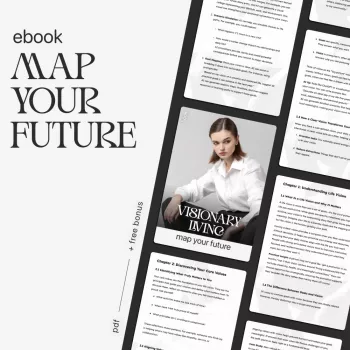
- Boost Your Self-Belief Fast | Confidence Building Guide | How to Believe in Myself More | Digital Personal Growth Workbook (suggested use: 10–15 minutes daily for 7 days, then 2–3 times per week)
- Luxe Hacks for Small Closets Checklist | Digital Download Closet Organization Guide (a quick “environment win” can reinforce follow-through and reduce daily friction)
- Cordless Vacuum Cleaner, 235W Brushless Motor, 40Min Runtime (removing small household stressors can make it easier to keep routines consistent)
FAQ
How long does it take to build self-belief?
Noticeable shifts can happen within days when actions are small and consistent, because you’re gathering fresh evidence quickly. Deeper, steadier confidence usually builds over weeks as you repeat the routine and improve the skills that support it.
What if affirmations feel fake or make things worse?
Use realistic statements such as “I’m learning to handle this” or “I can take the next step,” and pair them with one small action that provides proof. If a phrase spikes anxiety, make it more specific and neutral until it feels believable.
How do I stop comparing myself to others?
Reduce exposure to triggers where possible, track one personal metric, and do a weekly review to see your own progress. Keeping comparisons focused on your past self turns attention into a tool instead of a threat.










Leave a comment