AI Mind Reset: 7-Minute Routine for Calm, Clear Focus

AI Mind Reset: Calm Thinking and Practical Support for Mental Clarity
Racing thoughts, spirals of worry, and harsh self-talk can hijack focus in minutes. A reset doesn’t require perfection or hours of downtime—just a repeatable way to slow the loop, name what’s happening, and choose a next step that matches reality. AI Mind Reset is a digital eBook built around simple cognitive support routines that pair reflective prompts with AI-assisted reframing, helping turn “stuck” moments into clearer thinking. Use it as a daily clarity practice, a mid-day reset, or an evening wind-down to reduce mental clutter and regain steady attention.
What “mind reset” means when thoughts won’t let go
A mind reset is a short, practical intervention for moments when your thoughts won’t release their grip. It helps you shift from “being inside the story” to observing what’s happening—without pretending stress isn’t real.
- Normal stress is a proportional response to demands and deadlines.
- Rumination is repetitive replaying—reviewing the same worry without new information or action.
- Threat-mode thinking happens when the brain treats uncertainty like danger, pushing urgency, avoidance, or over-control.
Common negative-thought patterns tend to intensify these states:
- Catastrophizing: jumping to worst-case outcomes.
- Mind reading: assuming you know what others think (usually something negative).
- All-or-nothing thinking: “If it isn’t perfect, it’s a failure.”
- Overgeneralizing: one hard moment becomes “this always happens.”
When clarity drops, attention narrows, memory becomes selective (you recall “proof” that matches the fear), and the body’s stress response adds a sense of emergency. A simple reset sequence can interrupt that momentum:
pause → label → reality-check → reframe → choose a small action
How AI-assisted cognitive support can help (and where it can’t)
Used well, AI can act like a structured mirror. It can reflect language patterns, summarize triggers, and propose alternative interpretations—especially when your mind feels too crowded to sort thoughts fairly.
That said, it’s important to keep the role realistic. AI can support reflection and planning, but it does not diagnose, replace therapy, or handle emergencies. For foundational context on evidence-based approaches that inspire many self-reflection tools, the APA’s overview of Cognitive Behavioral Therapy is a helpful reference point.
Guardrails that usually improve outcomes:
- Be specific: describe the situation in plain, observable terms.
- Avoid reassurance-seeking loops: don’t ask the same “What if?” question ten ways.
- Request balance: ask for multiple plausible interpretations and a grounded next step.
Privacy basics matter, too: avoid sharing identifying details, and use general descriptions or fictionalized examples when needed.
Inside the AI Mind Reset eBook: what the guide is designed to do
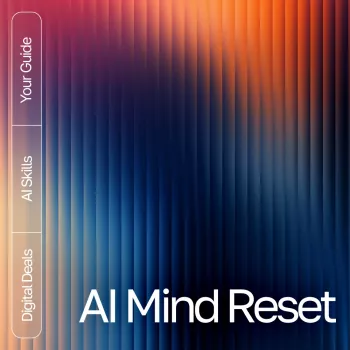
AI Mind Reset | Digital eBook for Calm Thinking, ways to manage negative thoughts with ai, Cognitive Support Guide for Mental Clarity and Focus is designed as a skill-building toolkit. The goal isn’t “never feel stressed.” The goal is to get unstuck faster, think more fairly, and choose actions that reduce uncertainty.
At-a-glance: what the eBook helps with
| Challenge | Typical thought loop | Reset goal | Example AI request |
|---|---|---|---|
| Overthinking | “What if I mess everything up?” | Reduce uncertainty spiral; pick one next step | “Summarize my worry in one sentence, then list 3 realistic outcomes and 1 small action I can take today.” |
| Self-criticism | “I’m behind; I’m failing.” | Shift from judgment to evidence-based evaluation | “Rewrite this self-criticism into a fair, specific assessment and one compassionate coaching statement.” |
| Decision paralysis | “If I choose wrong, it’s ruined.” | Clarify priorities; reduce perfection pressure | “Ask me 5 questions to clarify what matters, then propose 2 ‘good-enough’ options with tradeoffs.” |
| Mental clutter | “I can’t focus; there’s too much.” | Externalize tasks; create a short plan | “Turn this brain-dump into 3 categories and a 20-minute focus plan.” |
A simple reset routine: 7 minutes from spiral to steady
Prompt templates for managing negative thoughts without feeding them
Quick copy/paste prompts
| Situation | Prompt | Best time to use |
|---|---|---|
| Night-time rumination | “Summarize the worry, list 3 facts, then draft a ‘tomorrow plan’ with 2 actions and a stop time.” | Before bed |
| Work overwhelm | “Convert this into a prioritized task list with time estimates and a 25-minute starter sprint.” | Start of day |
| Social anxiety | “Give 3 benign interpretations of this interaction and one helpful follow-up question I could ask.” | After an event |
Building mental clarity and focus across the week
If organization reduces stress, pairing mental decluttering with physical decluttering can help your brain feel less “on alert.” A quick, practical companion is Luxe Hacks for Small Closets Checklist | Digital Download Closet Organization Guide, Minimalist Wardrobe Decluttering Tips, Small Space Storage Solutions, especially when decision fatigue is tied to clutter and too many daily micro-choices.
For broader guidance on coping tools after stressful or disruptive events, NIMH offers a straightforward overview of coping with traumatic events. For a big-picture framework on why mental health skills matter at a community level, WHO’s summary on mental health strengthening our response is a useful resource.
When to get extra help
FAQ
Is AI Mind Reset a replacement for therapy?
No. It’s an educational, self-guided eBook for reflection and skill practice, and it doesn’t diagnose conditions or replace licensed mental health care. If symptoms feel intense or ongoing, professional support is the best next step.
What if using AI makes me overthink more?
Use time limits and a stopping rule: one balanced reframe plus one small next step, then close the loop. If you notice reassurance-seeking or spiraling, switch to a grounding action and return later with a clearer, more specific question.
How quickly can calmer thinking show up?
Some people feel relief after a single short reset, especially when they move from vague fear to a concrete next step. More lasting change typically comes from repetition—try a 7-day practice of one 3–7 minute reset per day.








Leave a comment