Kids Teepee Tent With Windows for Bright Cozy Play
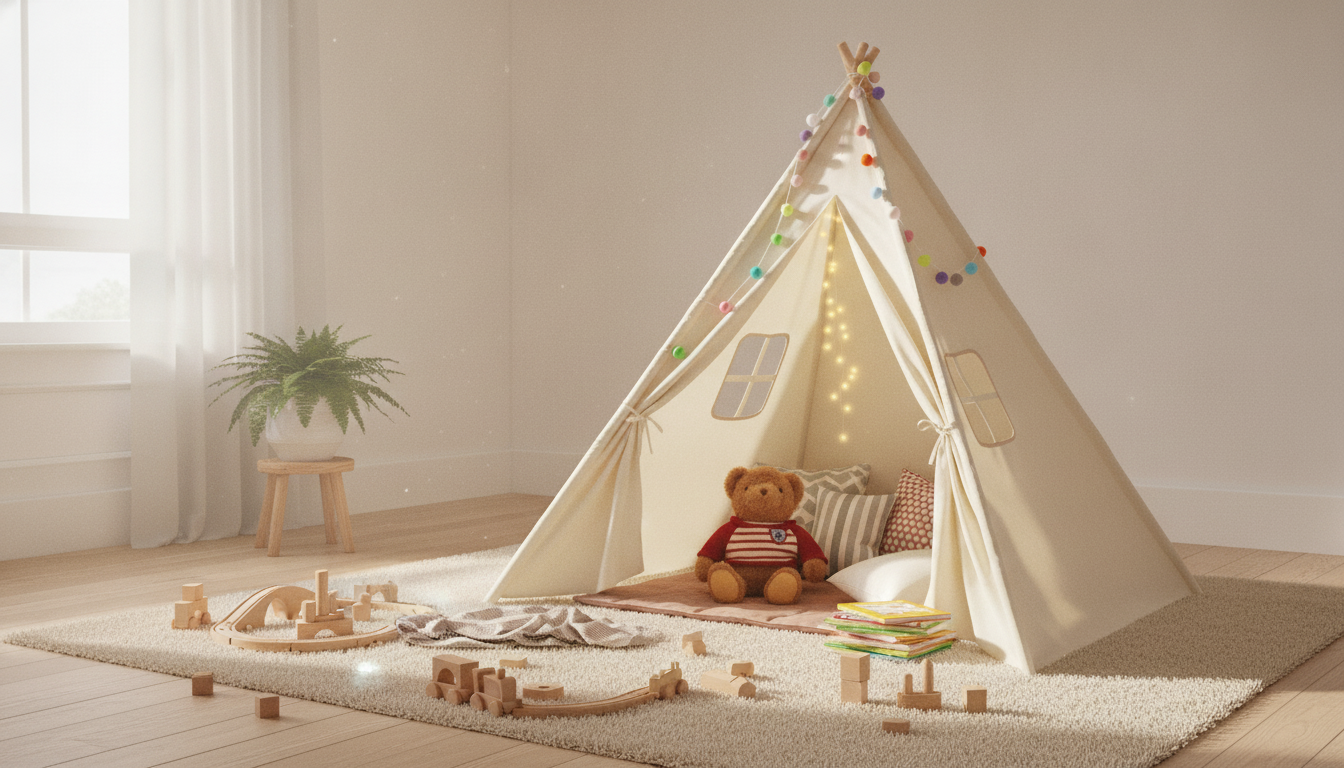
Kids Teepee Tent with Windows: A Cozy Play Space for Reading, Pretend Play, and Calm Time
A teepee tent with windows can turn an unused corner of a bedroom or playroom into a bright, breathable hideaway. Window panels add airflow and visibility for peace of mind, while kids get that “little house” feeling that works for quiet time, pretend play, and sleepover-style fun. Whether it’s a mini reading den after school or a pretend campsite on a rainy day, a windowed teepee helps the space feel inviting instead of closed-in.
Why Windows Make a Teepee More Kid-Friendly
- Better airflow for long play sessions, especially when kids bring pillows and blankets inside.
- More natural light, so the interior feels cheerful rather than cave-like—helpful for younger children who dislike dark spaces.
- Easier supervision: caregivers can check in quickly without stepping into the play scenario.
- A built-in “lookout” feature that sparks pretend play: camping ranger station, storefront window, spaceship control room, or a castle turret.
What to Look For Before Buying
- Stable frame: poles should feel rigid when assembled and resist wobble during entry and exit.
- Smooth finishes: avoid splinters, sharp edges, or exposed hardware on poles and connectors.
- Fabric feel: breathable cloth is often more comfortable for indoor play than slick synthetics.
- Window design: look for stitched edges, reinforced corners, and secure coverings (if included).
- Door closure: tie-backs are simple and classic; for younger kids, avoid small detachable parts.
- Size and footprint: confirm it fits the intended corner with enough room for a child to sit, turn, and play.
- Ease of setup: clear instructions and a straightforward pole layout make quick take-down and storage easier.
Quick Comparison: Windowed Teepee vs. Standard Teepee
Both styles can be adorable, but windows change how the tent feels during everyday use. Windowed models typically feel cooler and brighter, while standard models can feel more enclosed and den-like. If the goal is a daily reading nook or a calm-down corner, windows often make the space more comfortable for longer stretches. Window placement matters, too—side windows can improve cross-breeze more than a single front cutout.
Windowed Teepee vs. Standard Teepee at a Glance
| Feature | With Windows | Without Windows |
|---|---|---|
| Airflow | Typically higher due to extra openings | Depends on door opening and fabric |
| Natural light | Brighter interior | Often dimmer inside |
| Supervision | Easier to peek in from multiple angles | Usually only the doorway |
| Cozy feel | Balanced: cozy but not stuffy | More enclosed, den-like |
| Best use cases | Reading nook, calm corner, longer indoor play | Shorter play bursts, imaginative “hideout” vibe |
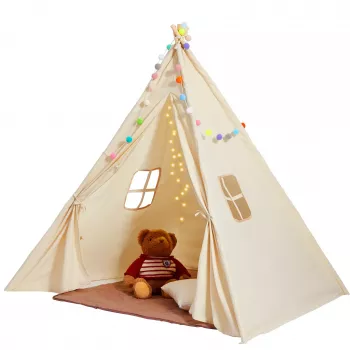
Featured Option: Kids Teepee Tent with Windows
If you want a play tent that feels open and livable, the Kids Teepee Tent with Windows is designed as an indoor-friendly play space with window openings for light and ventilation. It’s an easy fit for everyday routines—set it up as a reading nook with a floor cushion, a light blanket, and a small basket of books, then switch to pretend play when friends come over.
- Window openings help the interior stay bright and comfortable.
- Ideal for reading time, calm time, and imaginative role play.
- Great backdrop for “camping,” tea parties, or a mini shop setup.
Setting It Up for Comfort and Safety
- Choose a flat spot away from heaters, fireplaces, and dangling cords.
- Add a soft base (foam mat or rug) to reduce slipping and make sitting more comfortable.
- Keep bedding light: lightweight pillows and blankets are cozier and less likely to slump over openings.
- Leave room to move: a clutter-free interior makes it easier for kids to turn around and exit.
- Use low-heat lighting if you add lights—LED only—and keep battery packs out of reach for small children.
- Maintain a clear path around the entrance to prevent trips during energetic play.
For broader guidance on choosing and maintaining safe play products, review resources from the U.S. Consumer Product Safety Commission (CPSC), the American Academy of Pediatrics, and standards information from ASTM International.
Play and Learning Ideas That Make It a Daily Favorite
- Reading den: rotate a small stack of books weekly so the nook feels “new” without extra clutter.
- Pretend camping: add a simple “camp menu,” a toy lantern, and plush “marshmallows.”
- Calm-down corner: include a feelings chart, a sensory bottle, and a cozy throw for decompression.
- Quiet creative studio: clipboard, washable markers, sticker book, and a small bin for crafts.
- Shadow play: a supervised flashlight and paper cutouts can turn the window panels into tiny stages.
Care, Cleaning, and Storage
If your playroom doubles as a snack zone, a quick-clean tool can help keep the teepee area fresh. The 20Kpa Cordless Stick Vacuum Cleaner for Hard Floor, Carpet & Pet Hair, Rose Red is a convenient option for fast pickups, and the Cordless Vacuum Cleaner, 235W Brushless Motor, 40Min Runtime, 6-in-1 Lightweight for Household Cleaning is another in-stock choice for routine floor cleanup around high-traffic play areas.
Who It Suits Best
FAQ
Are teepee tents with windows safe for toddlers?
They can be, as long as the tent is age-appropriate, placed on a stable surface, and used with supervision. Avoid models with small detachable parts, keep cords and heaters far away, and follow the manufacturer’s setup and safety guidance.
How can a teepee tent stay stable on hardwood floors?
Place a non-slip rug or foam mat underneath and make sure all poles are fully seated and tightened per the instructions. Position the tent away from high-traffic walkways so it’s less likely to be bumped during play.
What should go inside a teepee for a cozy reading nook?
Start with a soft mat or rug, add one or two pillows, and include a light blanket for comfort. A small basket of books keeps it organized, and optional low-heat LED lighting can make it feel extra inviting.








Leave a comment