Stop Dog Whining: Vet Check, Triggers, and Training Plan
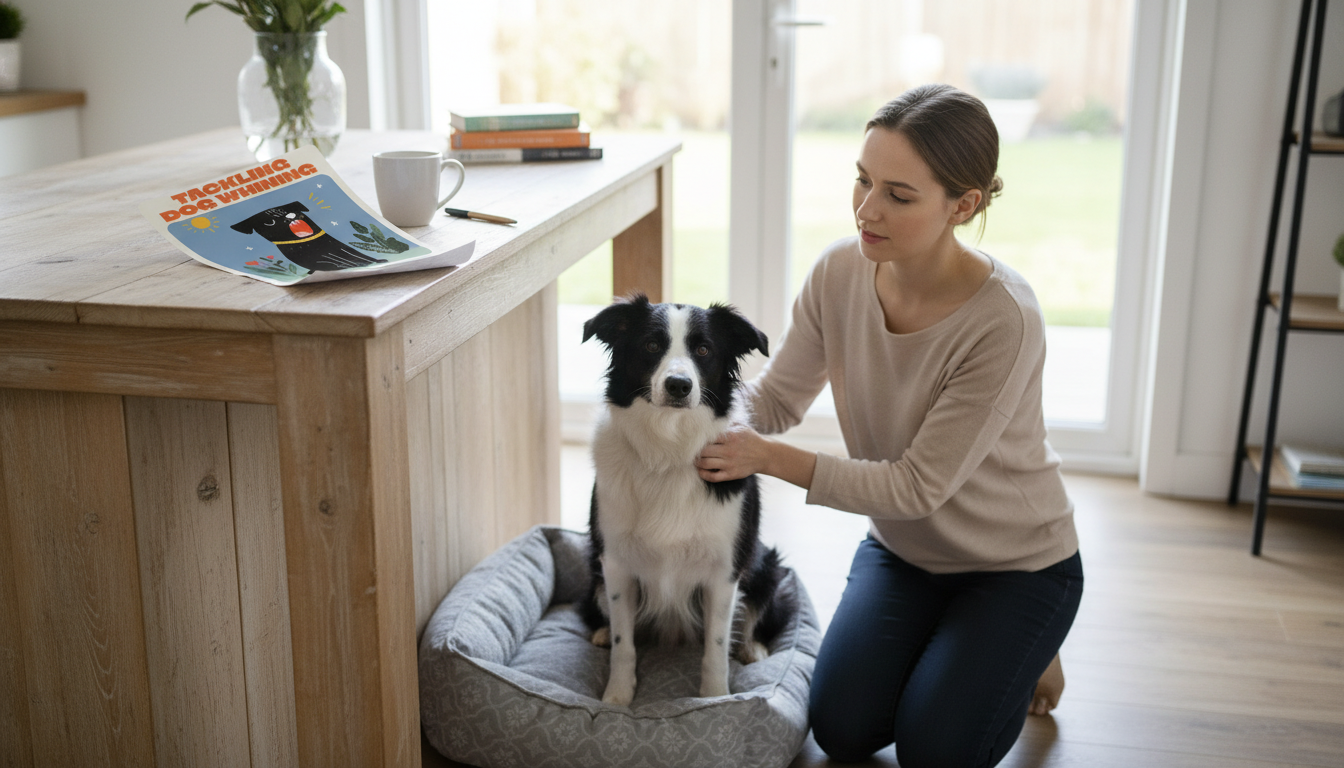
A Calm, Clear Plan for Tackling Dog Whining (Without Guesswork)
Dog whining can be confusing because it can mean many different things—need, excitement, stress, discomfort, or learned attention-seeking. The fastest way to make progress is to use a simple, repeatable process that separates “something is wrong” from “something was reinforced,” so responses stay consistent and your dog feels secure. Below is a practical plan you can follow day to day, plus a printable checklist resource that keeps training decisions steady.
What Dog Whining Often Communicates
Whining is a normal part of canine communication, but the “why” matters. Common categories include:
- Normal communication: brief whining that shows excitement, anticipation, or mild frustration.
- Needs-based whining: potty, thirst, hunger, or wanting access to a person/space.
- Emotional whining: anxiety, fear, overstimulation, or trouble settling.
- Pain or medical discomfort: new, intense, persistent, or unusual whining—especially with limping, panting, appetite changes, or restlessness.
- Learned behavior: whining that reliably earns attention, treats, play, or release from a crate/room.
Start With Safety: When Whining Needs a Vet Check
Training works best when discomfort is addressed first. Treat sudden changes as a red flag, especially if whining appears abruptly or escalates quickly.
- Look for companion signals: hunched posture, sensitivity to touch, vomiting/diarrhea, coughing, pacing at night, or difficulty sitting/standing.
- Consider common triggers: recent injury, dental pain, ear infection, urinary issues, arthritis, GI upset, or post-surgery discomfort.
- If you’re unsure, rule out medical causes before behavior modification.
For a broader overview of behavior problems (and when to involve professionals), the Merck Veterinary Manual is a helpful reference.
A Simple Observation Routine That Makes Whining Easier to Solve
Before you change anything, observe the pattern for 3–7 days. The goal is to identify what reliably happens before and after whining—because that’s what predicts whether it’s need, emotion, or reinforcement.
- Track time of day, location, who is present, and what happened right before whining started.
- Note what stops it: attention, opening a door, giving food, picking up a leash, tossing a toy, or ignoring.
- Identify the likely function: does your dog want something (access/attention), want something to stop (pressure/noise), or need help regulating (overarousal/anxiety)?
- Keep your routine consistent while observing (walks, feeding, sleep setup, enrichment) to reduce variables.
- If possible, take short video clips—posture, pacing, ear position, and gaze direction often clarify emotional state.
Whining clues and what to try first
| What you notice | Common meaning | First helpful response |
|---|---|---|
| Whining at the door after naps | Potty need or habit loop | Take out on a boring potty break; reward calm return |
| Whining when leash comes out | Overexcitement/anticipation | Pause; wait for 3–5 seconds of quiet; then proceed |
| Whining in the crate at night | Discomfort, anxiety, or schedule mismatch | Confirm potty; add calming routine; reward quiet; adjust bedtime needs |
| Whining when you sit down | Attention-seeking learned behavior | Reinforce a mat settle; give attention for calm, not noise |
| Whining during training | Frustration/confusion | Lower difficulty; increase rate of reinforcement; add breaks |
How to Respond in the Moment (Without Reinforcing Whining)
The goal is not to “win” against whining—it’s to meet real needs, prevent accidental rewards, and teach a clear replacement behavior your dog can succeed with.
- Meet genuine needs first: confirm potty, water, and basic comfort, then move into training choices.
- Avoid accidental rewards: if whining reliably produces eye contact, talking, petting, food, or freedom, it tends to increase.
- Reinforce an alternative behavior: teach “quiet + sit,” “go to mat,” or “touch” as a replacement action.
- Mark and reward silence: catch 1–2 seconds of quiet, calmly reward, and gradually build duration.
- Use predictable routines: structured walks, play, training, and rest reduce stress-based vocalizing.
- Keep body language steady: calm movements and low emotional intensity help dogs settle faster.
If separation-related distress is part of the pattern, the ASPCA’s separation anxiety guide is a solid starting point for understanding the signs and next steps.
Skill Building: Calmness, Confidence, and Frustration Tolerance
- Mat/bed training: reward choosing the mat, then relaxing; add duration and mild distractions.
- Impulse control games: “wait” at doors, gentle “leave it,” and “take it” help dogs tolerate delays without vocalizing.
- Settle after excitement: after play or walks, use a 5-minute decompression routine (water, sniffing, then a calm chew).
- Increase enrichment, not chaos: sniff walks, food puzzles, and appropriate chews often reduce boredom-driven whining.
- Change the environment when needed: block window triggers, add white noise, adjust crate placement, or create a quiet retreat.
When you want expert help, choosing a qualified professional matters; the AVMA’s guide to selecting a dog trainer outlines what to look for.
Using a Printable Checklist to Stay Consistent Day to Day
For a ready-to-use resource, see the Printable checklist for tackling dog whining. It’s designed to keep responses steady while you teach “quiet,” “go to mat,” and other replacement skills.
Helpful Tools for a Cleaner, Calmer Training Setup
- 20Kpa Cordless Stick Vacuum Cleaner for Hard Floor, Carpet & Pet Hair, Rose Red
- Cordless Vacuum Cleaner, 235W Brushless Motor, 40Min Runtime, 6-in-1 Lightweight for Household Cleaning
Common Mistakes That Keep Whining Going
FAQ
Should dog whining be ignored or addressed?
Address safety and basic needs first (potty, water, discomfort). If whining is attention-seeking or habit-based, avoid rewarding it and instead reinforce a clear alternative like “go to mat” or a brief “quiet” before giving attention.
How long does it take to reduce whining with training?
Small improvements can show up in days when responses are consistent and reinforcement is clear. Whining rooted in anxiety or long-practiced habits often takes weeks and may require structured training plans and environmental changes.
Why does my dog whine more when training starts?
It’s often excitement, frustration, or confusion. Lower the difficulty, increase the reward rate, add short breaks, and reinforce calm pauses so arousal doesn’t build into vocalizing.











Leave a comment